Smart Waste in Shift Production: Optimize 24/7 Waste Management

In industrial production environments, shift work is a fundamental part of daily operations. Production lines often run around the clock, while capacity, processes and material flows vary significantly between shifts. This dynamic has a direct impact on waste volumes within production facilities.
However, this variability is often not reflected in waste management processes. Emptying cycles and workflows are typically based on fixed schedules, regardless of actual production output. This leads to inefficiencies, both through unnecessary emptying and through overflowing bins during peak production periods.
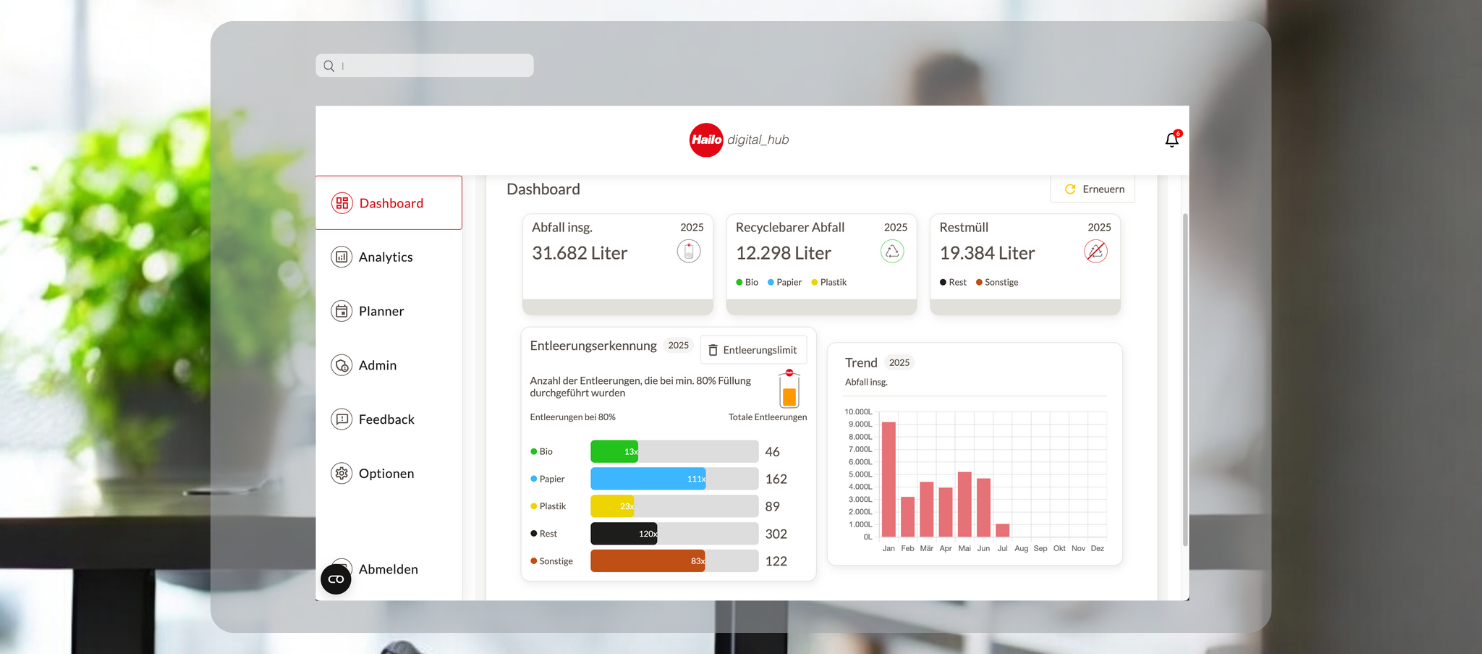
Smart waste solutions address this gap by adapting waste management to real production conditions. They provide transparency into waste volumes per shift and form the basis for demand-driven, dynamic waste management.
Different Waste Patterns Across Shifts
Waste volumes in production are closely linked to machine utilization. As a result, early, late and night shifts often show distinct patterns.
Higher waste volumes typically occur during peak production periods, while lower volumes are common during reduced activity phases. In addition, short-term fluctuations can occur due to changes in orders or production peaks.
Without digital data capture, these differences often remain unnoticed. Waste collection continues regardless of actual demand, leading to unnecessary effort or operational bottlenecks.
Dynamic Control Instead of Fixed Collection Cycles
Traditional waste management processes are often based on fixed intervals. In a 24/7 environment with fluctuating production levels, this inevitably creates a gap between planning and reality.
Digital waste management solutions address this issue directly. Sensors continuously measure fill levels and provide real-time data. Based on this information, collection cycles can be adjusted flexibly according to actual demand.
Emptying schedules can therefore be adapted based on:
- shift patterns
- production areas
- current utilization
- short-term peaks
This transforms waste management into a dynamic process aligned with production operations.
Optimizing Night Shift Operations
Night shifts often generate lower waste volumes while operating with reduced staffing levels. Fixed schedules in this context frequently lead to unnecessary service activities.
Digital waste data enables targeted adjustments. Collections can be reduced or rescheduled without compromising operational safety, while full transparency of bin status is maintained at all times.
This allows for more efficient resource allocation and better control of shift-based operations.
Managing Production Peaks
In addition to regular shift-based differences, short-term production peaks present a key challenge. Rapid increases in waste volumes can lead to overflows and additional operational effort.
Sensors installed in containers make these developments visible at an early stage. Increased fill levels can be detected immediately and taken into account.
As a result, collection schedules can be adjusted in real time, routes optimized and critical areas prioritized. This reduces the risk of disruptions to production processes.
Smart Waste in the Context of Industrial Processes
Shift operations highlight that waste management cannot be viewed in isolation. It is closely linked to production processes, utilization and material flows.
Digital waste data provides additional insight into actual operations within the facility. It complements existing KPIs and can indicate process changes or inefficiencies.
Smart waste thus becomes an integral part of data-driven production management.
In 24/7 shift operations, rigid waste management processes quickly reach their limits. Fluctuating utilization, varying waste volumes and short-term production peaks require flexible control.
Smart waste solutions provide the transparency needed to align waste processes with real conditions. Collection cycles are demand-driven, resources are used more efficiently and operations become more stable.
Digital waste management is therefore a key building block for efficient and resilient production processes in industrial facilities.